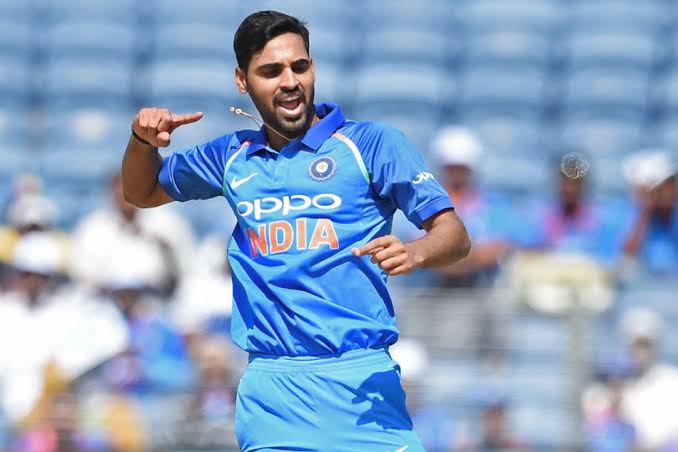

Bhuvneshwar Kumar’s career has seen its share of highs and difficult phases. Injuries have repeatedly interrupted the Indian fast bowler’s journey, but the veteran pacer has continued to work on his fitness and preparation.
At 36, Bhuvneshwar’s latest fitness transformation has attracted attention. His trainer Surya Yadav has revealed that the fast bowler has brought his body fat down from around 20 per cent to nearly 13-14 per cent over the last three years. Interestingly, his weight has remained almost unchanged at approximately 73-74 kg.
The numbers show that his focus has not been on simply losing weight. Instead, the objective has been to become stronger, leaner and better equipped to handle the physical demands of fast bowling.
From 40 Kg Squats to 120 Kg
Bhuvneshwar’s progress in the gym is another major part of his transformation.
According to his trainer, the pacer was initially uncomfortable with heavy weight training because of his history of back, ankle and knee injuries. His strength-training journey began cautiously before gradually progressing to heavier loads.
He previously worked with around 40 kg while squatting. Today, he can reportedly squat between 110 and 120 kg.
However, lifting heavier weights is only one part of the programme. His training also includes Olympic lifts, plyometrics, jumps and throwing drills. These exercises are aimed at improving explosive power, balance and the ability to generate force quickly.
For a fast bowler, those qualities can be crucial during the run-up, delivery stride and landing phase of bowling.
What Does Bhuvneshwar Kumar’s Training Routine Look Like?
The veteran pacer’s fitness programme is not restricted to conventional gym exercises.
His overall preparation reportedly includes:
- Strength training and squats
- Olympic lifting
- Plyometric drills
- Jump and explosive-power exercises
- Throwing work
- Bowling practice
- Batting and fielding
- Rehabilitation and injury-prevention exercises
Bhuvneshwar can train five to six days a week, while his overall cricket preparation may take several hours during intensive phases.
The training is therefore a combination of strength, conditioning, cricket skills, recovery and injury management.
Why Strength Is Important for a Fast Bowler
Fast bowling is one of the most physically demanding roles in cricket.
A bowler has to accelerate during the run-up, jump into the delivery stride, land with considerable force and transfer energy through the legs, hips, core, back and upper body.
This movement is repeated again and again during matches and training.
For Bhuvneshwar, strengthening the body has become particularly important because of his previous injury problems. His programme focuses not only on becoming stronger but also on improving movement, power and bowling efficiency.
His trainer has also worked with him on aspects of his bowling mechanics, with the aim of helping him produce force while reducing unnecessary stress on the body.
Bhuvneshwar’s Weight Has Barely Changed
One of the most interesting details about his transformation is that the weighing scale has not changed dramatically.
Bhuvneshwar’s weight has reportedly stayed around 73-74 kg, while his body fat has fallen from approximately 20 per cent to 13-14 per cent.
This is known as improving body composition.
In simple terms, the objective is to reduce excess body fat while maintaining or building lean muscle. For an elite athlete, this can be more meaningful than simply trying to lose kilos.
A fast bowler needs enough strength and muscle to generate pace, absorb the impact of landing and handle repeated high-intensity movements.
His Workout Doesn’t Stop at the Gym
Bhuvneshwar’s preparation also extends to the cricket field.
Alongside strength training, he spends time bowling, batting and working on his fielding. Rehabilitation and recovery are also important parts of the programme.
His return to full-intensity bowling has reportedly been managed progressively. Instead of immediately putting maximum stress on the body, controlled bowling sessions can be used before the workload is gradually increased.
This approach becomes especially important for an experienced fast bowler who has previously dealt with multiple injuries.
Bhuvneshwar Kumar’s IPL 2026 Season
The results of his preparation were also visible during IPL 2026.
Bhuvneshwar reportedly finished the season with 28 wickets, making him the highest wicket-taking Indian bowler in the tournament. He also continued to bowl at speeds around the 140 kph mark.
For a 36-year-old fast bowler, maintaining that kind of pace and workload after years of injury problems is a notable achievement.
His story is therefore about more than a return to competitive cricket. It is also about changing his approach to fitness and preparing his body differently.
Experience, Fitness and the Next Chapter
Bhuvneshwar Kumar’s transformation shows why an athlete’s fitness cannot always be judged by body weight alone.
His reduced body fat, improved strength, explosive-power training and carefully managed workload have all become important parts of his preparation.
The reported jump from 40 kg squats to 110-120 kg, along with a reduction in body fat to around 13-14 per cent, reflects the amount of work that has gone into his fitness over the past few years.
At 36, Bhuvneshwar continues to rely on a combination of experience, skill and physical preparation. His comeback serves as a reminder that staying competitive in professional cricket requires much more than talent — it requires consistent training, recovery and the ability to adapt.