
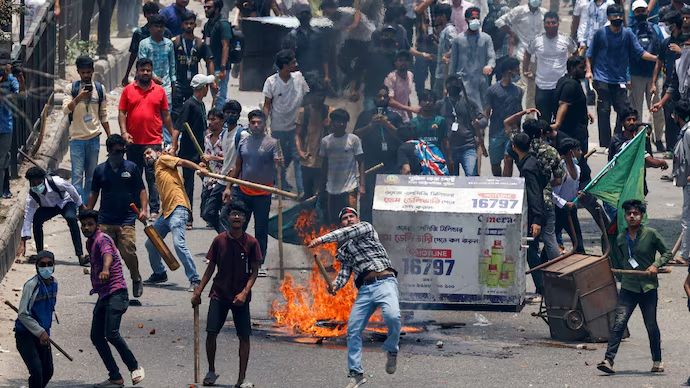

Nearly 1,000 Indian students have returned to India from Bangladesh, where a nationwide curfew has been imposed due to deadly unrest over a quota system for government jobs. The protests, led by students, have resulted in over 115 deaths in clashes with police and pro-government activists.
The Indian Ministry of External Affairs (MEA) has stated that 778 students have returned through various land ports, while around 200 have returned by regular flights from Dhaka and Chittagong airports. The MEA is in touch with over 4,000 Indian students still in Bangladesh and is providing necessary assistance.
The Indian High Commission in Dhaka, along with the Border Security Force (BSF) and the Bureau of Immigration, has been working to ensure the safe passage of Indian students through border crossings. The MEA has advised Indian nationals in Bangladesh to avoid unnecessary travel and stay indoors.
The protests in Bangladesh are against the government’s job quota system, which reserves a significant portion of government jobs for certain groups. The protesters argue that this system is discriminatory and prevents meritorious candidates from securing government positions. The Bangladeshi authorities have shut down all educational institutions indefinitely, disrupting the lives of many students, including those from India.
In addition to the Indian students, citizens of Nepal and Bhutan have also crossed into Meghalaya from the violence-affected areas, bringing the total number of people taking refuge in Meghalaya to over 670. The Meghalaya government has set up a helpline to assist its citizens affected by the violence in Bangladesh.
One of the students who returned, Asif Hussain, described the experience as harrowing, recalling a six-hour journey under a security escort to the India-Bangladesh border. Hussain and about 80 other Indian students hired private taxis to travel to the border, where they faced further delays before finally crossing into India.
The ongoing protests have not only disrupted daily life but also severely affected communication networks, with mobile internet services cut off in many areas. The Indian High Commission has activated multiple helplines operating round the clock to assist Indian nationals and has been providing regular updates to keep families informed about the situation.


